
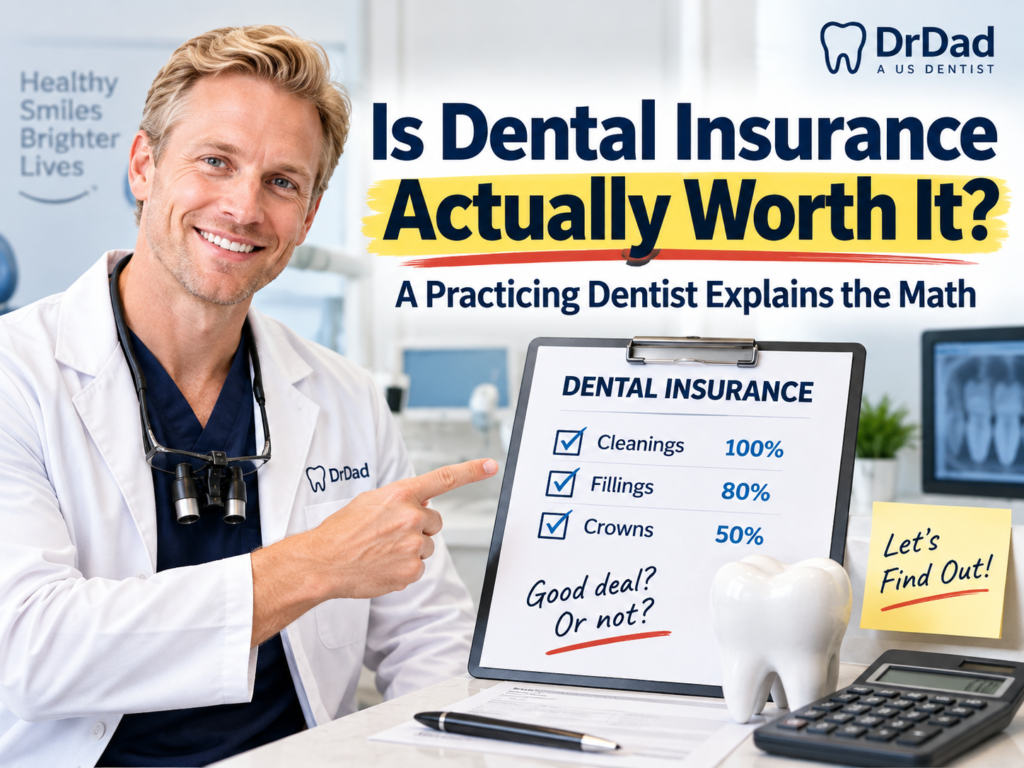
Quick Answer: Dental insurance can be worthwhile if you expect substantial covered treatment or your employer pays much of the premium. If you pay the full premium yourself and mainly need routine cleanings, compare one year of premiums plus out-of-pocket costs against what you would pay without insurance.
Four Numbers That Matter
Compare the premium, deductible, coverage percentage, and annual maximum. For example, a hypothetical $40 monthly premium costs $480 annually. If your preventive visits would cost $450 in cash, the premium alone may exceed that amount—though coverage can still help with unexpected treatment. An employer contribution changes the calculation.
Why Doesn’t “50% Covered” Mean Half the Bill?
A $1,600 crown with a listed 50% benefit does not guarantee an $800 payment. The insurer may apply its own allowed fee, deductible, remaining annual maximum, network rules, clinical requirements, or exclusions. A pretreatment estimate is useful but may not guarantee final payment.
What I’ve Seen in My Dental Office
In nearly 10 years of practice, I recall only one or two especially frustrating claim issues involving Delta Dental, while I have personally encountered delays, documentation requests, and unexpected payment problems with MetLife more often. These are my own experiences—not comparative denial-rate statistics or a prediction about either insurer. Both companies have public consumer complaints, and individual plans differ.
When Does Buying Coverage Make Sense?
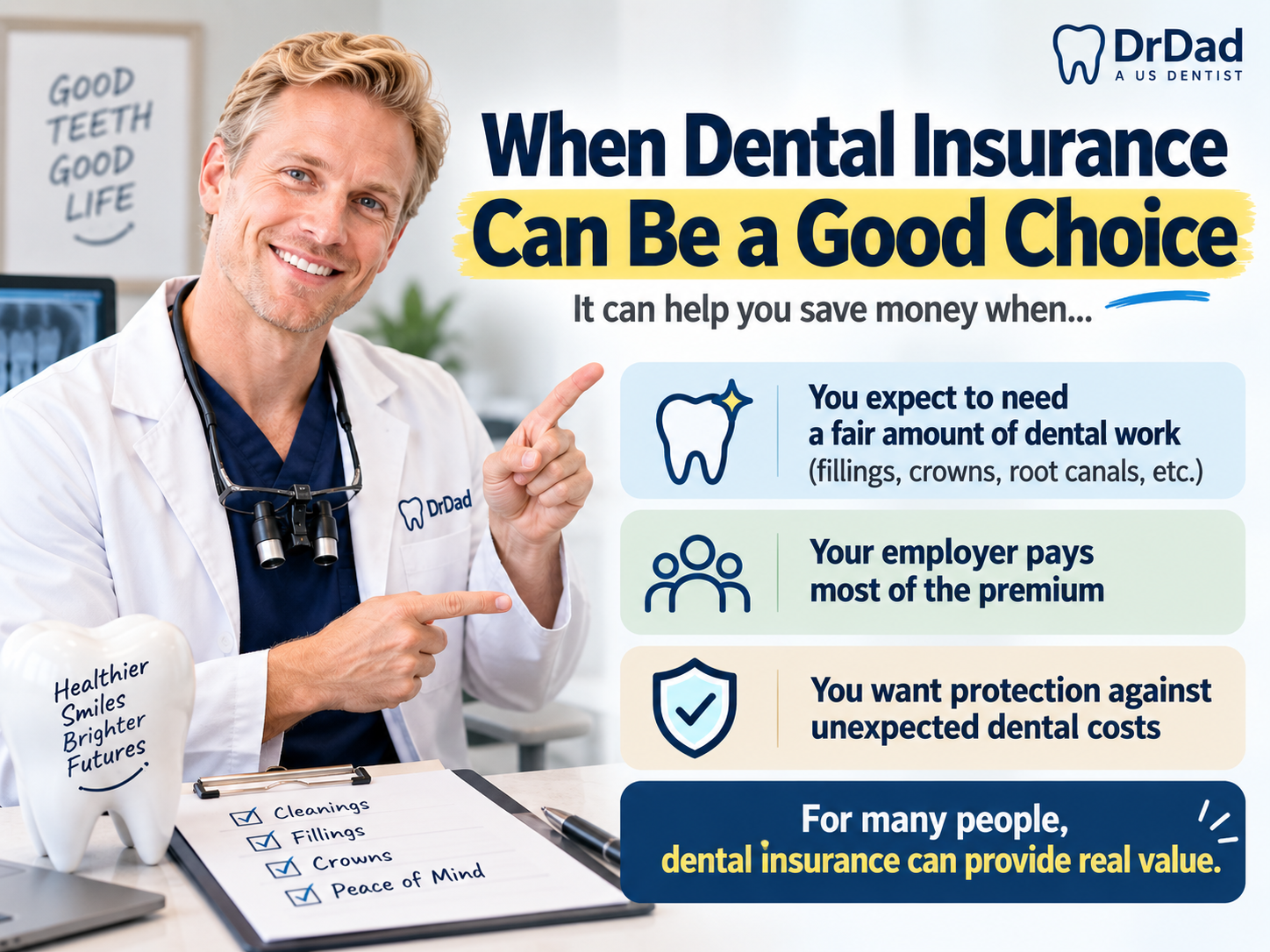
Insurance may be especially useful if you expect fillings, crowns, or other covered work, or receive employer-paid benefits. For an individual plan, check waiting periods before enrolling: buying coverage after discovering you need treatment may not help immediately. Compare network dentists, annual limits, exclusions, and the appeal process.
Questions to Ask Before Enrolling
What will twelve months of premiums cost? What is the deductible and annual maximum? Which treatments are covered, at what allowed fees? Is my dentist in-network? Are there waiting periods or replacement limits? How are estimates, denials, and appeals handled?
DrDad Tips
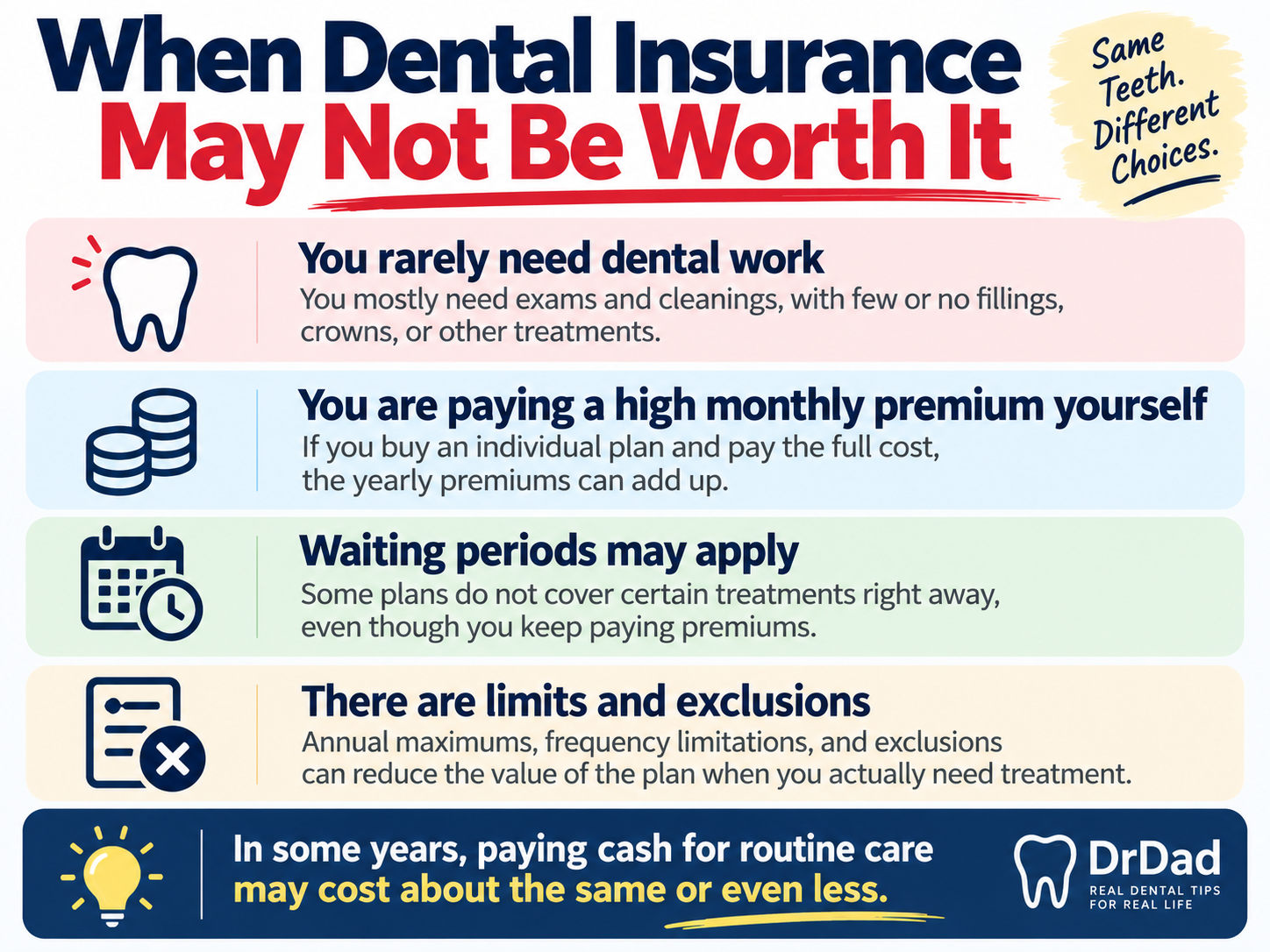
Dental insurance is not automatically a good deal or a bad deal. If you expect substantial covered dental work, a good dental plan can be very valuable.
If you need very little dental work and your employer pays most of the premium, insurance can still make sense. But if you rarely need treatment and personally pay a substantial individual premium, run the numbers.
Don’t judge a plan by one attractive percentage. Look at the premium, deductible, applicable fee basis, annual maximum, waiting periods, exclusions, network, clinical requirements, and claim process together.
The best dental insurance for you is the plan whose actual benefits make sense for your teeth, expected treatment, and budget—not simply the plan with the prettiest percentages.
Medical & Dental Disclaimer
This article is for general educational purposes only and does not constitute individualized medical or dental advice, diagnosis, or treatment planning. It does not establish a dentist-patient relationship. Dental conditions and treatment needs vary by individual. Discuss your specific oral health and treatment options with your treating dentist.
Financial & Insurance Disclaimer
This article is for general educational purposes only and is not individualized financial, insurance, tax, or legal advice. Dental insurance benefits vary significantly by insurer, employer, state, network, and individual policy. Premiums, deductibles, annual maximums, waiting periods, exclusions, frequency limitations, allowed amounts, pretreatment estimates, claim decisions, and appeals can differ. Review your actual plan documents and verify benefits directly with your insurer before making financial or treatment decisions.
The author’s descriptions of insurance claim experiences are personal observations from practicing in his own dental office and are not a statistical analysis of insurer performance or denial rates.
References
- American Dental Association. Dental Insurance 101: PPO Plan Basics. https://www.ada.org/-/media/project/ada-organization/ada/ada-org/files/resources/practice/dental-insurance/ada_dental_insurance_101_ppo_plan_basics.pdf
- American Dental Association. Typical Dental Plan Benefits and Limitations. https://www.ada.org/resources/practice/dental-insurance/typical-dental-plan-benefits-and-limitations
- HealthCare.gov. Dental Coverage in the Health Insurance Marketplace. https://www.healthcare.gov/coverage/dental-coverage/
- MetLife. Group Dental Insurance. https://www.metlife.com/insurance/dental-insurance/group-dental/
- Delta Dental of Washington. Patient FAQs. https://www2.deltadentalwa.com/guest/public/patient-faqs
- Delta Dental of Washington. Individual & Family Resources FAQ. https://www.deltadentalwa.com/Individual-family-resources/faq
- Better Business Bureau. MetLife Consumer Reviews. https://www.bbb.org/us/ny/new-york/profile/insurance-companies/metlife-inc-0121-345/customer-reviews
- Better Business Bureau. Delta Dental of Washington Complaints. https://www.bbb.org/us/wa/seattle/profile/dental-plans/delta-dental-of-washington-1296-27026440/complaints