
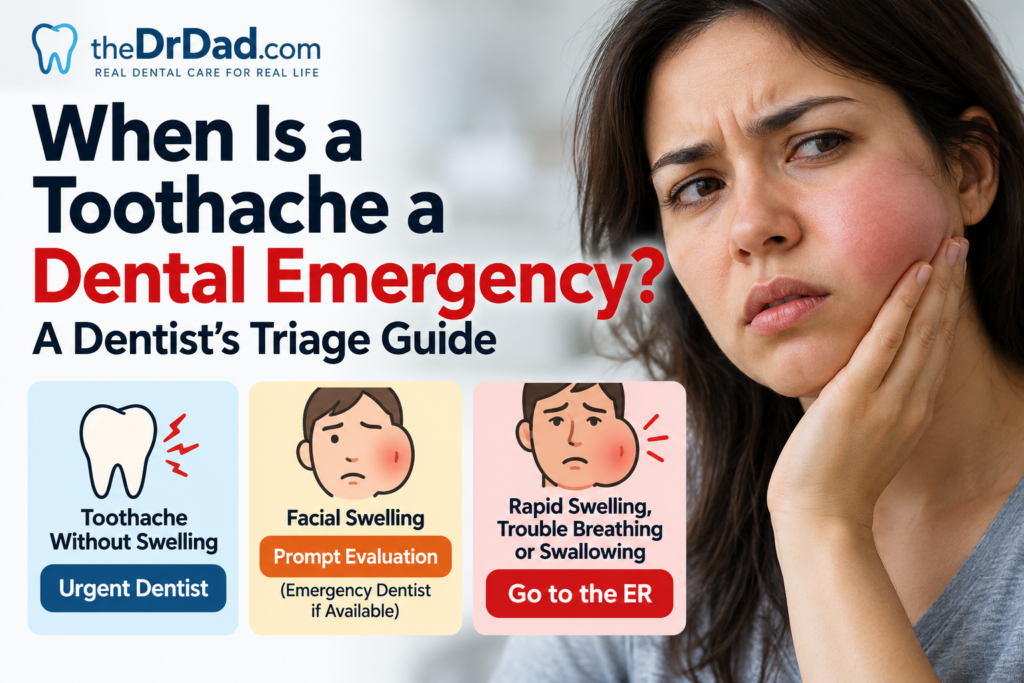
Quick Answer: A toothache needs prompt dental evaluation, but swelling, its location, and breathing or swallowing problems determine whether it may be a medical emergency. Difficulty breathing or swallowing, swelling under the jaw or tongue, or rapidly spreading facial or neck swelling: seek emergency care immediately.
When Should You Go to the Emergency Room?
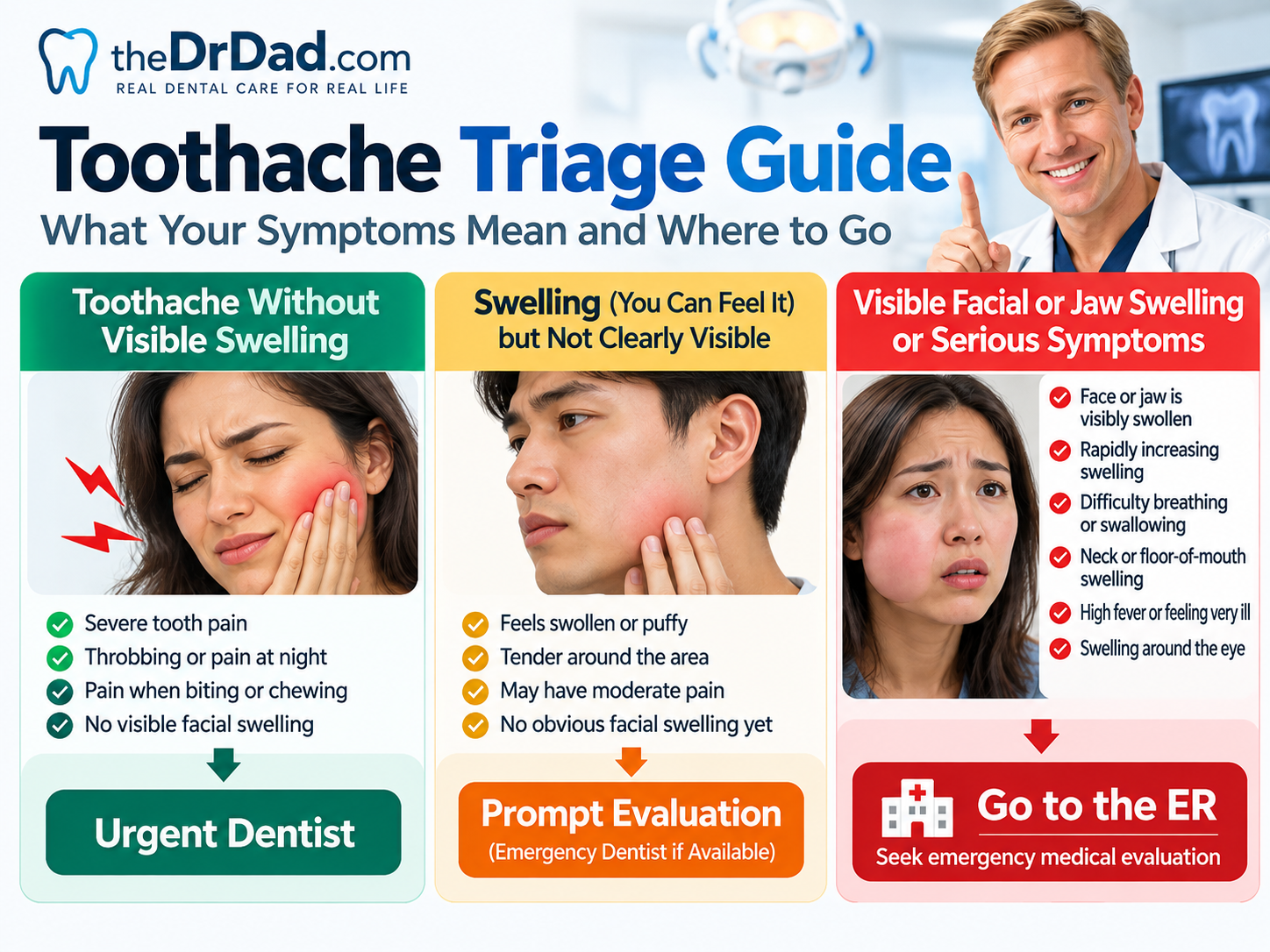
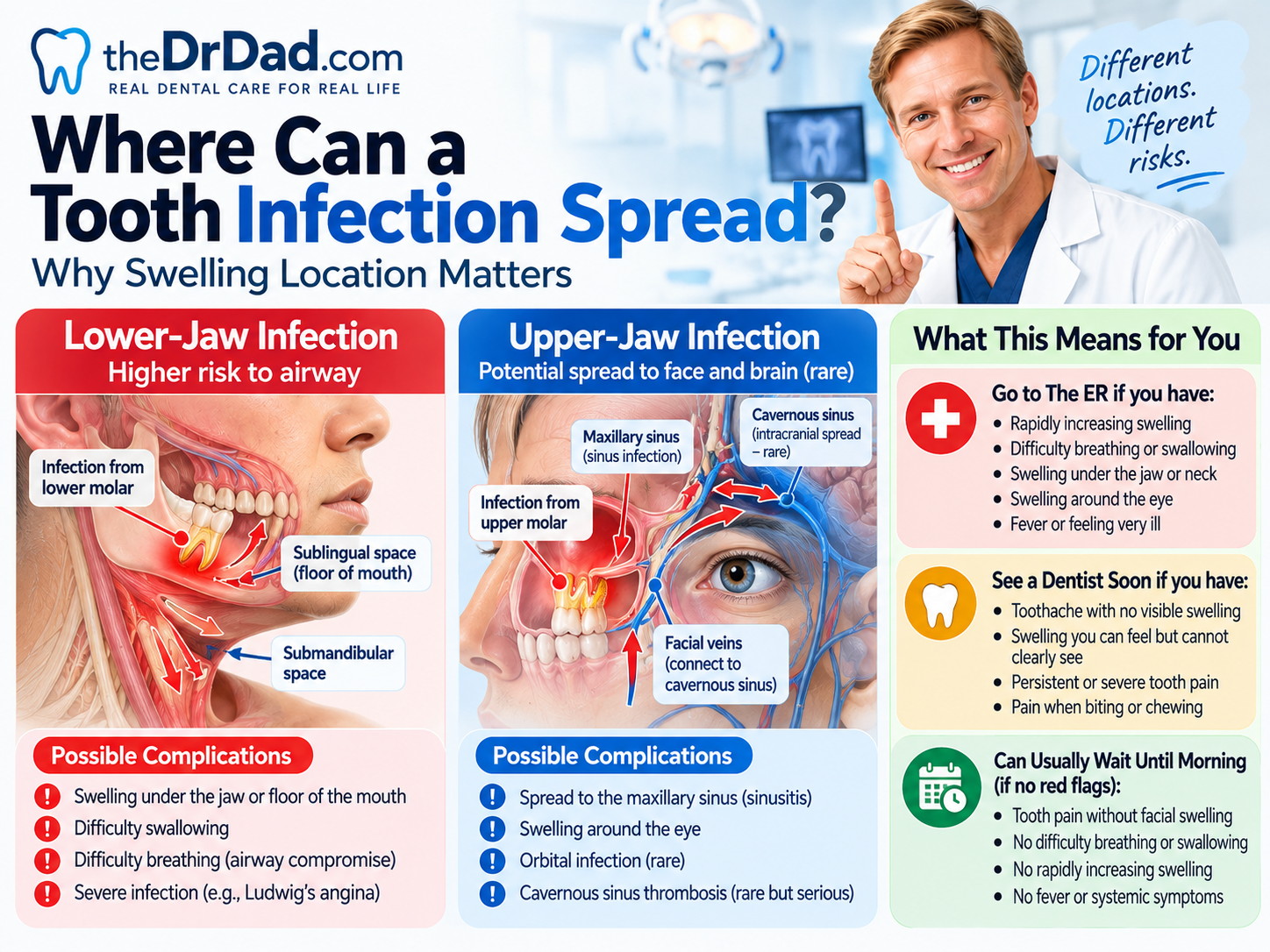
Go to the ER immediately for trouble breathing or swallowing, drooling, tongue or floor-of-mouth swelling, rapidly spreading swelling, or feeling seriously ill. Infections from lower molars can spread beneath the jaw and threaten the airway. Significant or worsening facial swelling at night, when dental care is unavailable, also warrants emergency evaluation. Upper-jaw infections can become serious too.
When Should You See an Emergency Dentist?
If you have dental swelling but can breathe and swallow normally and it is not rapidly worsening, seek a same-day dentist. Even pain without swelling deserves prompt care when severe or persistent. A dentist can diagnose the cause and may need to perform drainage, root canal treatment, or extraction.
Why Pain Alone Can Mislead You
Two patients with similar dental disease can report very different pain levels. Pain intensity is not a diagnosis. A toothache that suddenly disappears may mean the pulp has become necrotic—not that the tooth healed. Do not postpone evaluation simply because the pain subsides.
What Can Help While You Wait?
For appropriate patients, ibuprofen or naproxen, sometimes with acetaminophen, may temporarily help. Do not combine ibuprofen and naproxen. Kidney or liver disease, ulcers, blood thinners, pregnancy, allergies, and other medicines may affect safety; follow labeling and seek professional advice. Pain medicine does not treat the underlying dental problem.
DrDad Tips
When patients ask me whether a toothache is an emergency, I do not start with the pain number. I start with swelling, location, progression, breathing and swallowing.
If dental swelling is visible during the day and a dentist can see you immediately, call a same-day emergency or walk-in dentist.
If significant or worsening swelling develops at night and dental care is unavailable, go to the ER rather than simply waiting until morning.
If you have trouble breathing or swallowing, swelling beneath the lower jaw, tongue or neck, or rapidly progressing swelling, go to the ER now—day or night.
If you only feel mild swelling and otherwise feel stable, do not ignore it. Get a same-day dental evaluation when offices open.
And remember: pain getting better does not always mean the tooth is getting better. Sometimes the pulp has died and the next sign can be swelling.
References
- American Dental Association. Acute Dental Pain Management Guidelines.
- StatPearls / National Library of Medicine. Ludwig Angina.
- StatPearls / National Library of Medicine. Odontogenic Orofacial Space Infections.
- Mayo Clinic. Tooth Abscess: Symptoms and Causes.
- Mayo Clinic. Toothache: First Aid.
Medical & Dental Disclaimer
This article is for general educational and informational purposes only. It is not intended to provide individualized medical or dental diagnosis, treatment, or emergency triage. Dental pain and facial swelling can have many causes, and the appropriate diagnosis and treatment depend on an individual examination, medical history, dental examination and, when appropriate, diagnostic imaging.
If you have difficulty breathing or swallowing, rapidly progressing facial or neck swelling, significant swelling beneath the jaw or floor of the mouth, or other symptoms that may represent a medical emergency, seek immediate emergency medical care. Medication may not be appropriate for everyone; follow product labeling and consult a dentist, physician or pharmacist when you have medical conditions, take other medications, are pregnant, have medication allergies or are unsure what is safe for you.