
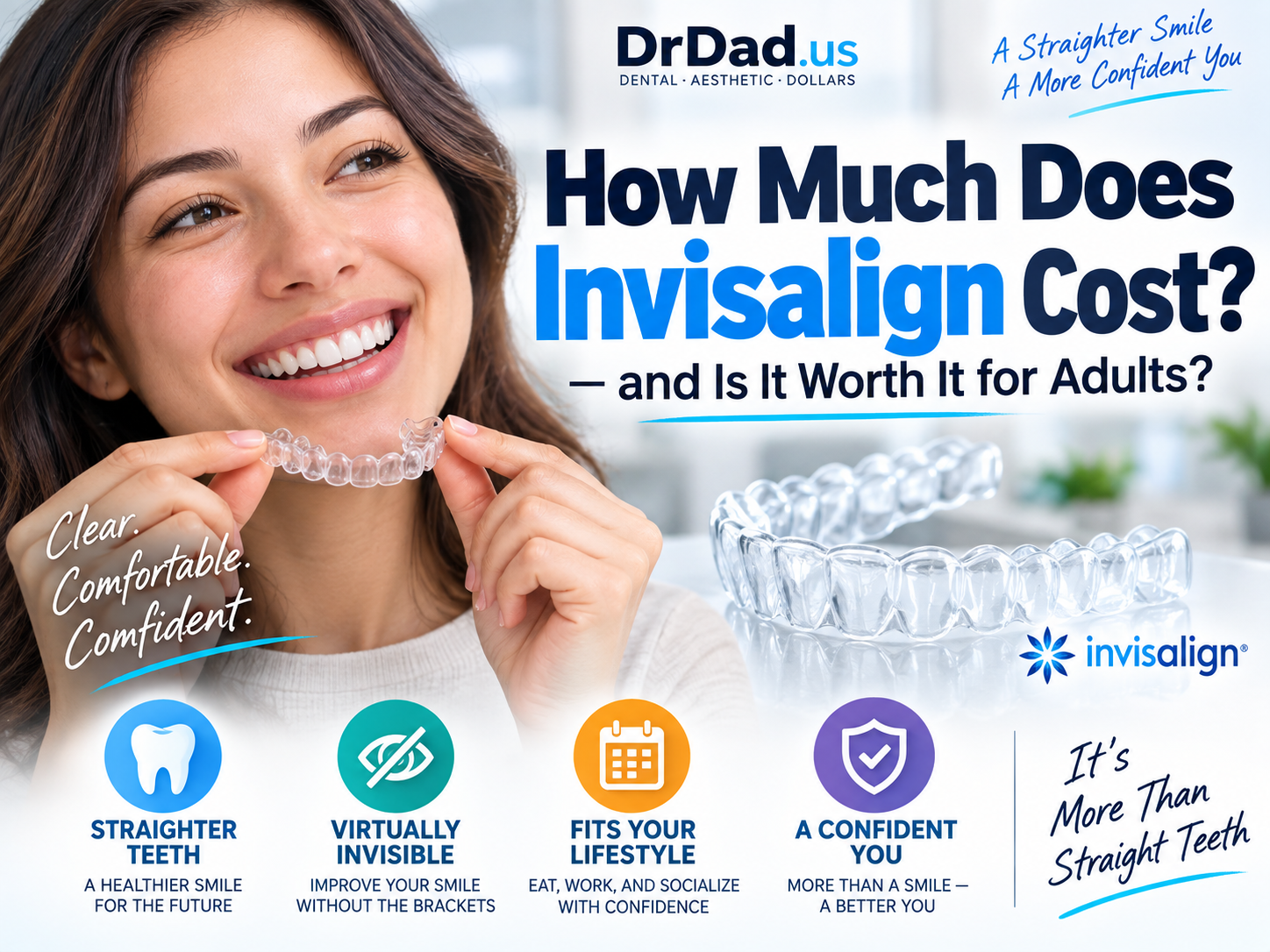
Patients ask me about Invisalign almost every day.
‘Doctor, do you think Invisalign would work for me?’
My answer is usually simpler than patients expect. First, look at your teeth honestly. If your teeth are significantly crooked—even when you compare them with other people’s teeth—and you have a more complicated bite problem, I would seriously consider traditional braces. But if your teeth are generally in decent position and there are a few things that bother you—a little crowding, a small gap, a tooth that is slightly rotated, or an alignment issue that most other people probably would not even notice—Invisalign can be an excellent option.
That distinction matters.
Invisalign Is Not Automatically Better Than Braces
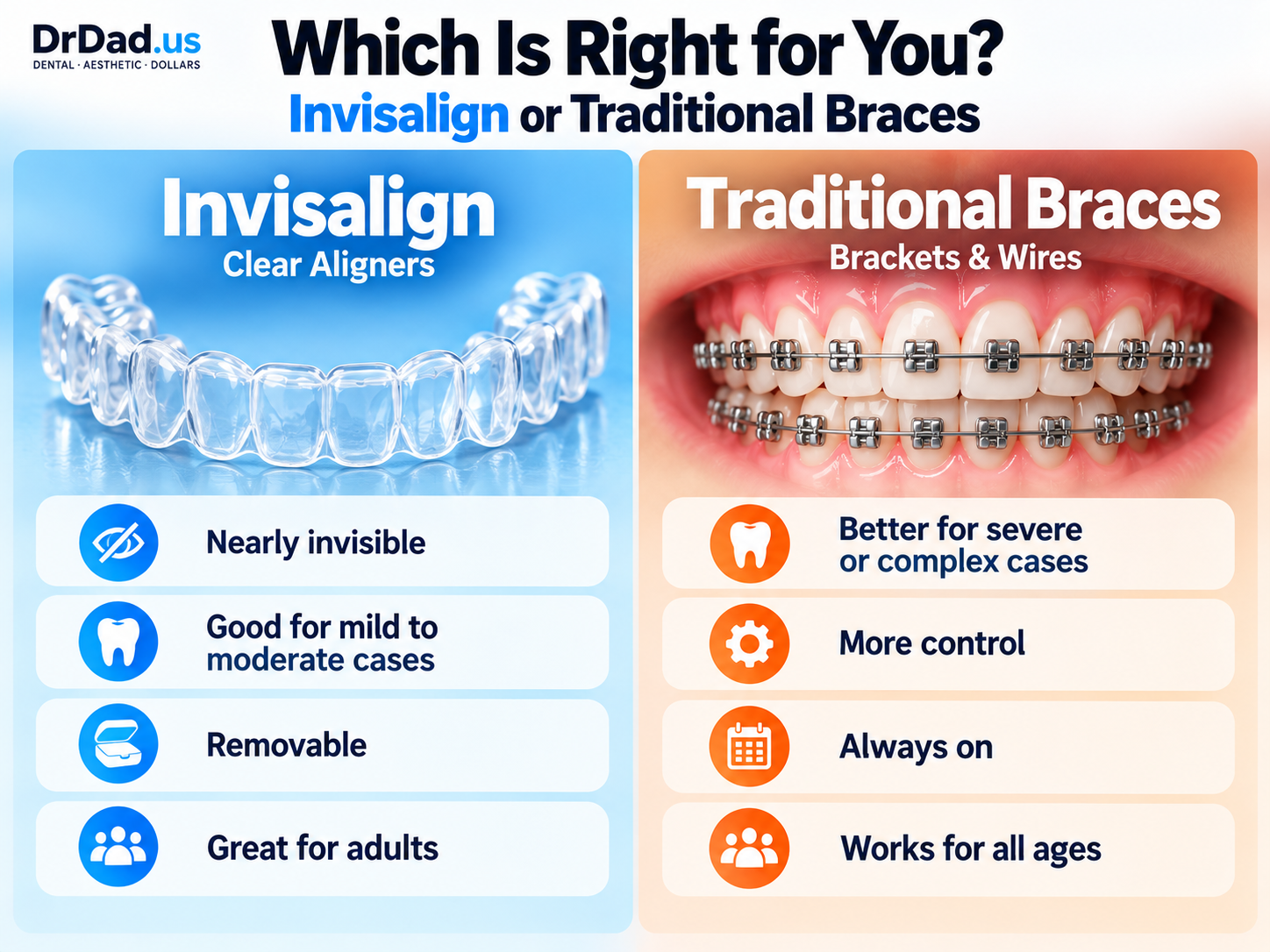
A lot of adults come into the dental office thinking Invisalign is simply a newer and better version of braces. I don’t look at it that way. Invisalign and traditional braces are different tools.
Traditional braces give the treating dentist or orthodontist excellent control over tooth movement. When teeth are severely misaligned or the bite requires more complicated correction, conventional orthodontics may give us more predictable control.
Invisalign, on the other hand, can be a great treatment for the right patient. And for many adults, the biggest advantage is obvious: you can straighten your teeth without spending months or years wearing visible metal brackets. That matters when you are working, meeting clients, going to school, dating, taking photographs, or simply don’t want braces showing every time you smile.
Who Do I Think Is a Good Invisalign Candidate?
Here is the simple way I explain it to my patients. If you look in the mirror and think, ‘My teeth are really crooked,’ and most other people would probably agree with you, I would not automatically choose Invisalign simply because it looks better. I would first determine how complicated the tooth movement and bite correction will be.
But there is another type of patient I see all the time. Their teeth actually look pretty good. Their friends may even say, ‘Why do you need braces? Your teeth look fine.’ But the patient sees that one rotated tooth every time they smile. Maybe the lower front teeth are crowded. Maybe there is a small space. Maybe the front teeth aren’t as straight as they would like.
That is the type of adult for whom Invisalign can make a lot of sense. You’re not necessarily trying to rebuild the entire bite. You’re improving something that has bothered you for years.
But Invisalign Only Works If You Actually Wear It
This is something patients sometimes underestimate. Traditional braces stay on your teeth. You cannot decide to take them off for dinner and forget to put them back on.
Invisalign is different. The aligners are removable, which is one of their greatest advantages—but that also means the patient becomes part of the treatment. If you constantly remove your aligners and don’t wear them for the prescribed amount of time, your teeth may not track according to the treatment plan.
So before choosing Invisalign, ask yourself a very practical question: Will I actually wear my aligners the way my dentist or orthodontist tells me to? If the answer is no, removable aligners may not be the best choice for you.
How Much Does Invisalign Cost?
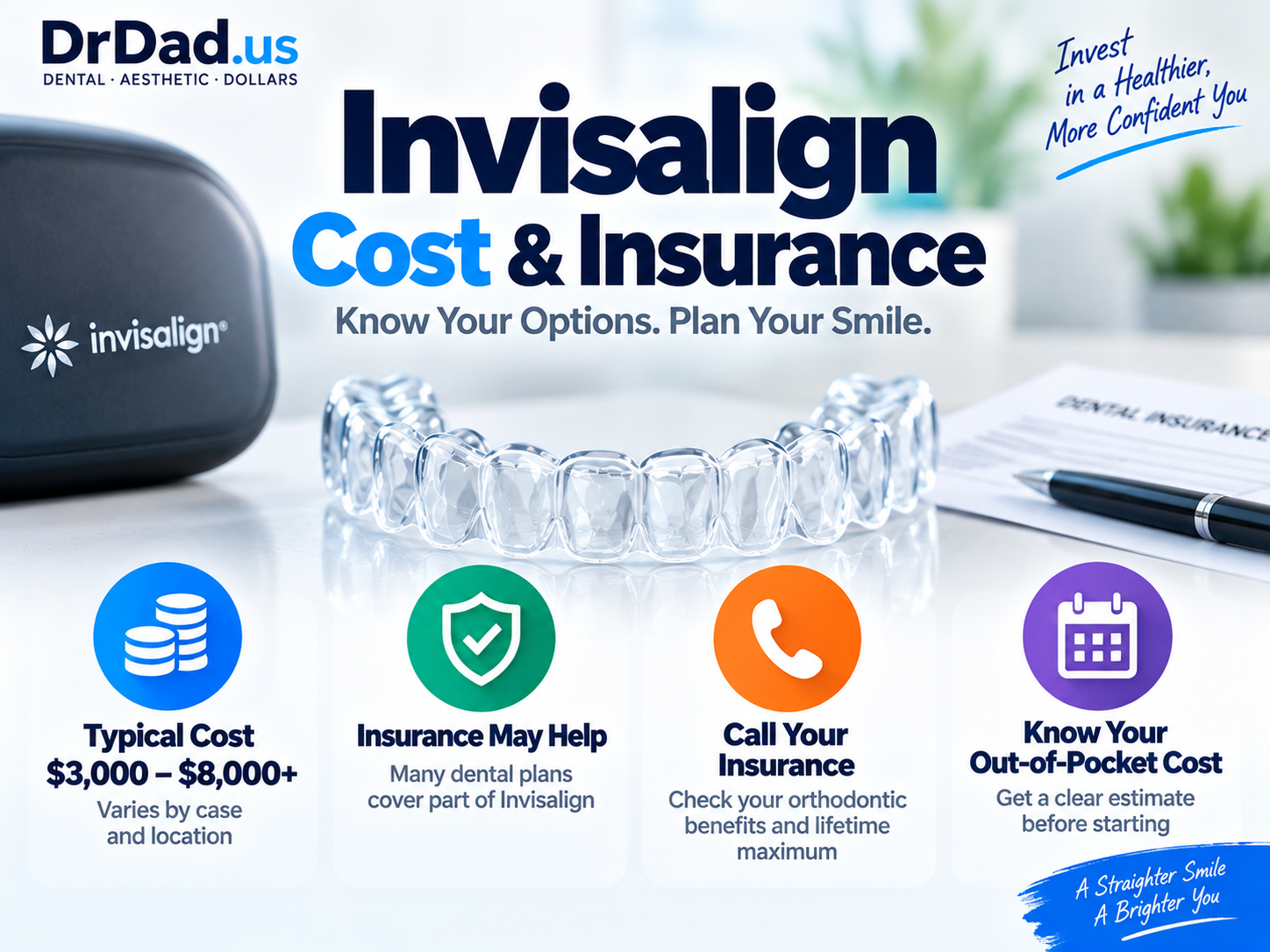
There isn’t one universal Invisalign price. The total cost can vary based on where you live, how complicated your case is, how long treatment is expected to take, whether refinements are needed, and the fees of the dentist or orthodontist providing treatment.
A relatively simple adult alignment case is very different from a complicated orthodontic case requiring substantial tooth movement and bite correction. That is why searching online for ‘Invisalign cost’ can give you a huge range of numbers.
What matters more than finding the lowest advertised price is understanding exactly what is included. Ask whether your quoted fee includes the initial records and scans, treatment planning, aligners, follow-up visits, refinements if necessary, and retainers after treatment. A cheap number is not necessarily cheap if several important parts of treatment are charged separately later.
Does Dental Insurance Pay for Invisalign?
Sometimes—and this is something you should check before starting treatment.
If you have dental insurance, call the insurance company yourself and ask specifically about your orthodontic benefits. Don’t simply ask, ‘Do you cover Invisalign?’ Ask: ‘Does my plan include orthodontic coverage for adults, what percentage or amount does it cover, and what is my lifetime orthodontic maximum?’
Some dental insurance plans provide an orthodontic benefit that can help pay for part of eligible Invisalign treatment. Other plans may provide limited benefits, impose age restrictions, have waiting periods or lifetime maximums, or provide no adult orthodontic coverage at all.
Your dentist’s office may also help verify benefits, but I still like patients to understand their own insurance. Make the call. Know your benefits. Know your maximum. Then you can evaluate the real out-of-pocket cost.
Is Invisalign Worth It for Adults?
For the right patient, I think it absolutely can be. But I wouldn’t make that decision based only on appearance or price.
I would ask three questions: How difficult is the orthodontic problem? How important is it to you that other people don’t see braces? Are you disciplined enough to wear removable aligners consistently?
If you have relatively manageable alignment concerns, strongly prefer a discreet treatment, and know you will wear the aligners properly, Invisalign can be a very attractive option. If your orthodontic problem is much more complicated, however, I would not choose Invisalign simply because it is more aesthetically appealing.
The goal isn’t to wear the coolest orthodontic appliance. The goal is to move your teeth safely and predictably into a position that works.
What I Would Do
This is how I would approach the decision if these were my own teeth. If my teeth were severely misaligned or I had a complicated bite problem, I would choose the treatment that gave my dentist or orthodontist the control necessary to get the best result—even if that meant traditional braces.
If my teeth were already reasonably good and I simply wanted to improve several imperfections that bothered me, I would strongly consider Invisalign. And before paying anything, I would call my dental insurance company and find out exactly what orthodontic benefits I had.
Then I would compare the actual Invisalign cost after insurance, not simply the price printed on an advertisement.
Don’t choose Invisalign because it is newer. Don’t reject braces because they are older. Choose the orthodontic treatment that fits your teeth, your bite, your lifestyle, and your ability to follow the treatment plan.
For many adults with the right case, Invisalign can be a very good way to improve a smile without making orthodontic treatment the center of their life.