
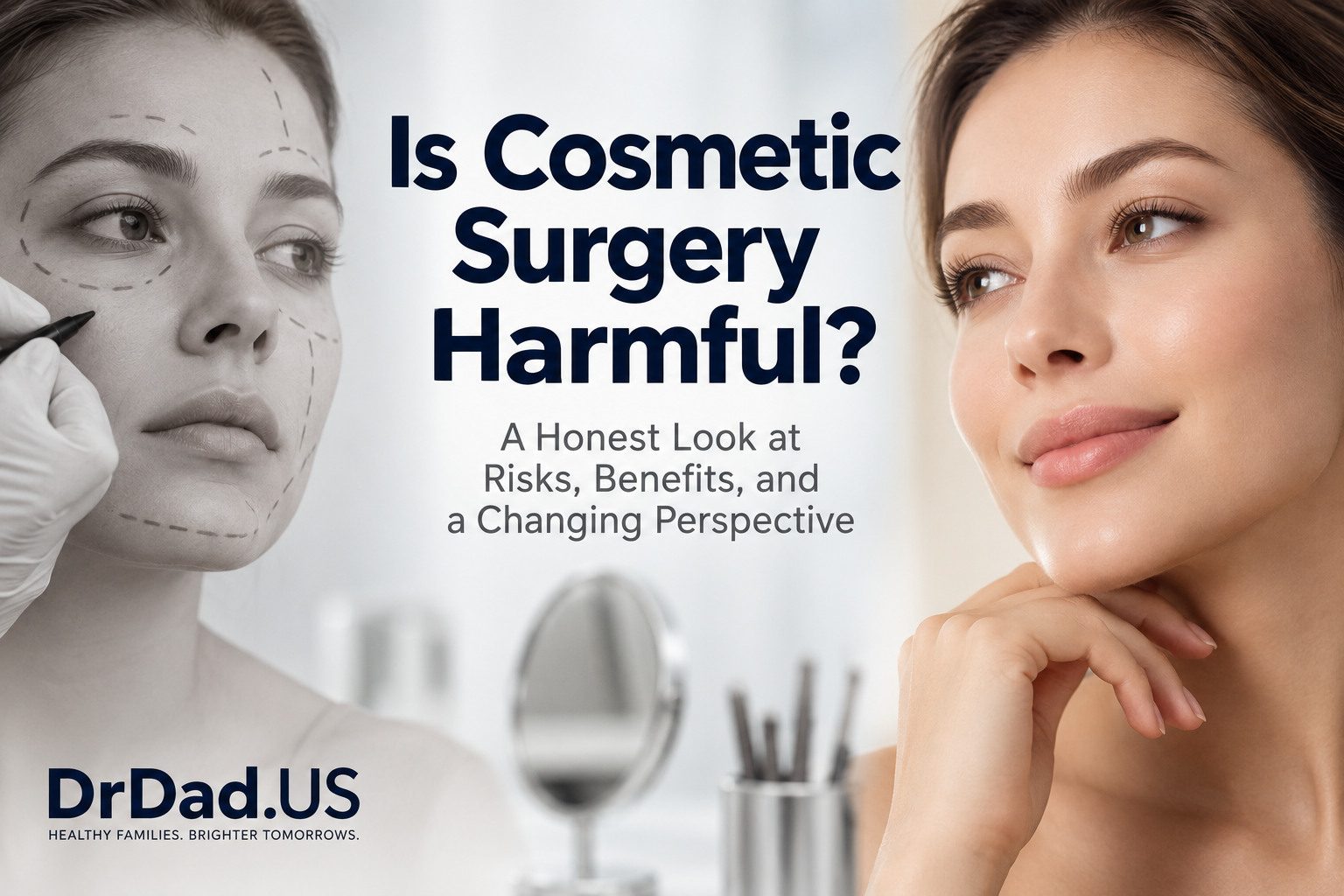
Before I became a general dentist, I had a fairly conservative view of cosmetic procedures.
Whether it was cosmetic surgery, aesthetic medicine, or cosmetic dentistry, my first reaction was often negative.
Why?
The reason was actually very simple.
I was worried about permanent complications.
If someone is healthy and functioning normally, why take a medical risk simply to look better? What if something goes wrong? What if a complication cannot be reversed? What if a person ends up regretting a procedure that was never medically necessary in the first place?
For a long time, that was how I looked at cosmetic treatment.
But after becoming a healthcare professional and spending years in clinical practice, my perspective changed completely.
Today, I no longer believe that cosmetic treatment should automatically be viewed as something unnecessary, superficial, or harmful.
I now see it very differently.
Why I Used to Be Against Cosmetic Procedures
My old opinion came from a conservative medical mindset.
If a treatment was necessary to restore health or function, the potential risk made sense to me. But if someone was already healthy and wanted treatment only to improve appearance, I questioned whether taking that risk was justified.
This applied not only to plastic surgery.
I had similar concerns about cosmetic dentistry and other elective aesthetic procedures.
The possibility of a permanent complication was what bothered me most.
Every medical or dental procedure has risks. Even when a procedure is performed correctly, the human body does not always respond exactly as expected.
So my thinking was simple:
If you do not need the procedure, why expose yourself to the risk?
At the time, that seemed like a reasonable position.
But it was also incomplete.
What Changed My Mind?
Becoming a dentist changed the way I thought about treatment.
As a healthcare professional, you begin to understand something that may not be obvious from the outside: medicine and dentistry are constantly evolving.
Techniques improve.
Technology improves.
Materials improve.
Diagnostic tools improve.
And, perhaps most importantly, clinicians gain experience from procedures that have been performed and refined over many years.
Modern cosmetic treatment is not risk-free. No responsible doctor or dentist should promise that.
But many established cosmetic procedures today can be performed with a much greater degree of planning and predictability than I once assumed.
That distinction changed my thinking.
The question was no longer simply:
“Could something go wrong?”
Of course something can go wrong. That is true of almost any medical or dental procedure.
A better question became:
“How predictable is this procedure, what are the realistic risks, and can those risks be reduced through proper patient selection, planning, and an experienced clinician?”
That is a very different way of looking at cosmetic treatment.
Cosmetic Treatment Is Not Only About Looking Better
There was another part of cosmetic treatment that I underestimated when I was younger.
Confidence matters.
We often describe cosmetic procedures as if they are only about vanity.
I do not think that is always fair.
Our appearance can affect the way we feel about ourselves.
A person may have a feature that has bothered them for years. It may affect the way they smile, take photographs, interact socially, or present themselves professionally.
In dentistry, I can see this very clearly.
A patient who has been uncomfortable with his or her smile for years may behave differently after improving it.
The physical change may involve the teeth.
But the emotional change can be much bigger.
The patient may smile more freely.
They may stop covering their mouth when they laugh.
They may feel more comfortable meeting people.
That experience helped me understand cosmetic procedures outside of dentistry as well.
Sometimes changing something on the outside can meaningfully affect how a person feels on the inside.
But Cosmetic Procedures Still Have Risks
My opinion has changed, but that does not mean I believe everyone should get cosmetic surgery or cosmetic dental treatment.
And it certainly does not mean complications have disappeared.
They have not.
Every procedure has limitations, and every patient is different. Results can vary depending on anatomy, health, healing, the specific procedure, the clinician, and many other factors.
This is exactly why I believe choosing the right doctor, dentist, or clinic is extremely important.
A beautiful advertisement does not tell you whether a clinician is qualified.
A low price does not tell you whether a procedure is appropriate for you.
And social-media popularity does not automatically mean that a doctor is the right doctor for your particular treatment.
When a procedure can permanently change your face, body, or teeth, I think the decision deserves more consideration than simply finding the most attractive before-and-after photo online.
Choosing the Right Provider Matters
If I were considering a cosmetic procedure for myself, I would want to understand several things before moving forward.
I would want to know the clinician’s education and training.
I would want to know how much experience that clinician has with the particular procedure I am considering.
I would want a realistic explanation of the expected result—not a promise of perfection.
And I would especially want the clinician to explain the possible complications and what would happen if the result did not go according to plan.
To me, a trustworthy consultation is not one where I am told:
“Don’t worry. Everything will be perfect.”
I would rather hear an honest explanation of both the benefits and the risks.
That allows me to make an informed decision.
My View Today
Years ago, I might have said that cosmetic surgery and cosmetic dentistry were unnecessary risks.
I do not believe that anymore.
Modern aesthetic medicine and dentistry have advanced significantly, and many established procedures can now offer results that are far more planned and predictable than I once imagined.
There are still risks.
There are still complications.
And there are still situations where the best decision may be not to have a procedure at all.
But I no longer think cosmetic treatment itself should automatically be considered harmful.
When the procedure is appropriate, expectations are realistic, and the treatment is performed by a properly trained and experienced professional, cosmetic treatment can potentially provide something very meaningful:
a more satisfying appearance and greater personal confidence.
For some people, that benefit can be significant.
DrDad Tip
If you are considering cosmetic surgery, aesthetic medicine, or cosmetic dentistry, do not choose a provider based only on price, advertising, or social media.
Research the clinician’s training and experience. Ask what results are realistically possible. Ask about complications. Ask what happens if something does not go as expected.
Most importantly, remember that the goal of cosmetic treatment should not be perfection.
The goal should be a realistic, well-planned improvement that you can feel confident about.
That is the biggest reason my own view of cosmetic treatment has changed.