

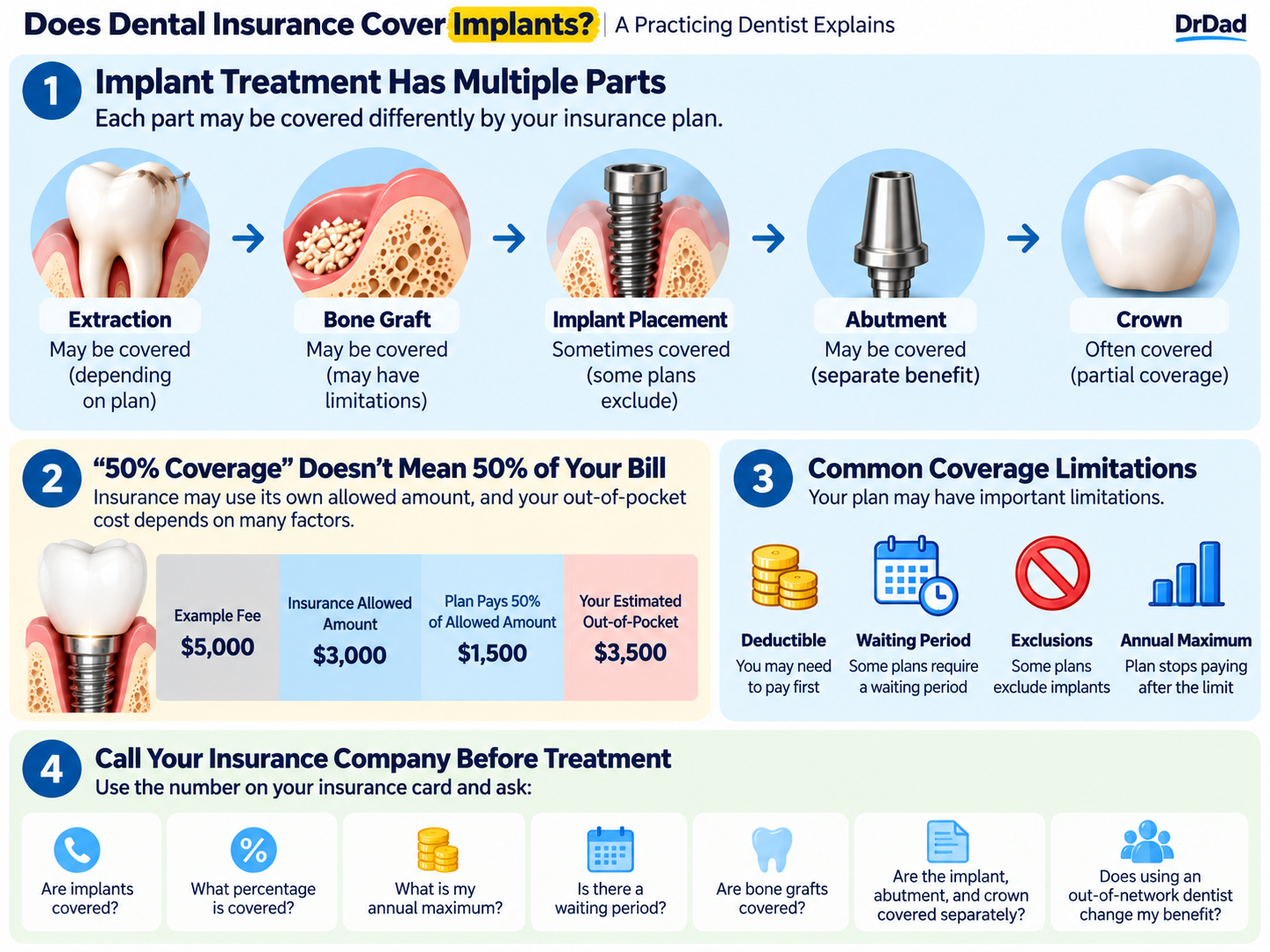
Quick Answer: Some dental insurance plans cover implants; others exclude them or pay only part. Even “50% coverage” does not necessarily mean the insurer pays half of your total bill.
Why Doesn’t 50% Coverage Mean Half the Bill?
Payment may be based on the insurer’s allowed amount, not the dentist’s full fee. Deductibles, annual maximums, waiting periods, network rules, and exclusions can reduce the benefit. In my practice, patients are often surprised that “covered” does not mean “paid in full.”
Which Parts Are Covered?
Extraction, bone grafting, implant placement, abutment, crown, and imaging may be billed separately. Your plan can cover each differently. Ask for a procedure-by-procedure estimate.
What Should You Check Before Treatment?
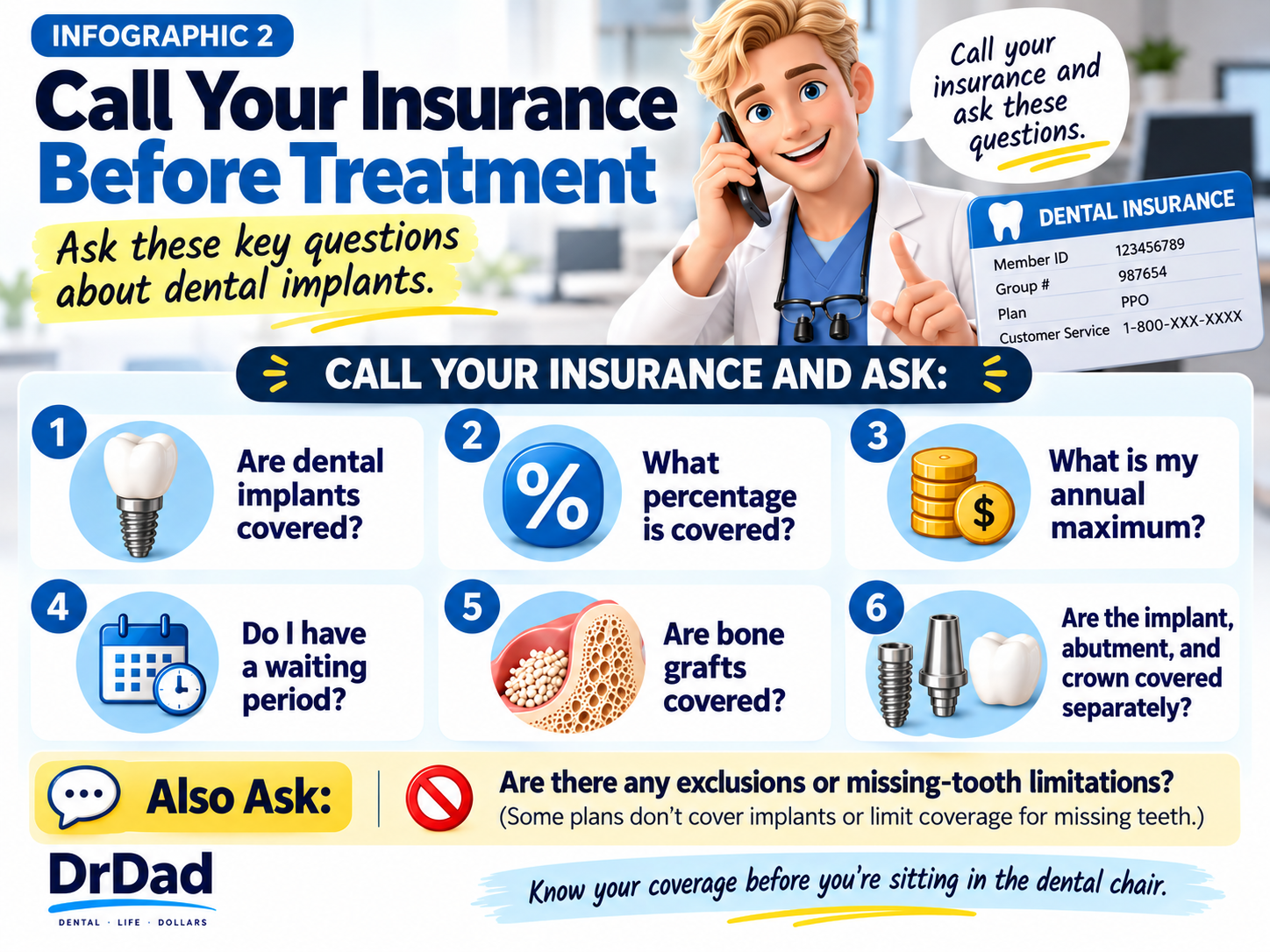
Call your insurer about implant benefits, deductibles, annual and implant-specific maximums, waiting periods, missing-tooth restrictions, network status, and remaining coverage. Request an itemized estimate showing the total fee, expected insurance payment, and your portion.
Does Preauthorization Guarantee Payment?
Not necessarily. A pre-treatment estimate helps, but final payment depends on your plan, eligibility, documentation, and claim processing. If a claim is denied, request the explanation of benefits and ask about appeal options.
My Clinical Advice
Insurance coverage is a financial decision, not a treatment recommendation. Discuss whether an implant is appropriate, what alternatives exist, and what each would cost after insurance. Learning your benefits before major treatment can prevent unpleasant surprises.
DrDad Tips
Dental insurance can be useful. But don’t confuse “covered” with “paid in full.”
Before major dental treatment: Know the treatment. Know the total estimated cost. Know your insurance benefits. Know your annual maximum. Know what you may owe.
Most importantly: Your dental office can verify benefits, submit estimates, and try to help you understand what your insurance may pay. But your insurance company ultimately determines how your claim is processed.
Disclosure
DrDad is not affiliated with, sponsored by, or compensated by any dental insurance company mentioned or referenced in this article. Any insurer or insurance plan discussed is included solely for educational purposes and should not be interpreted as an endorsement or recommendation.
Insurance benefits vary substantially by employer, insurer, state, policy, network, and individual plan. Examples in this article should not be interpreted as representations of coverage under your particular policy.
References
- American Dental Association (ADA) — Typical Dental Plan Benefits and Limitations.
- American Dental Association (ADA) — Dental Insurance Resources.
- Cigna Healthcare — Dental plan benefit materials, used only as an example of how implant benefits, waiting periods, maximums, and limitations can differ by plan.
- Your individual Evidence of Coverage, Summary of Benefits, Certificate of Insurance, or other applicable plan documents remain the appropriate source for the actual terms of your own dental benefits.
Medical & Dental Disclaimer
This article is for general educational and informational purposes only. It is not individualized dental advice, diagnosis, treatment planning, insurance advice, legal advice, or financial advice.
Dental conditions, treatment needs, costs, and insurance benefits vary from person to person. Reading this article does not establish a dentist-patient relationship with DrDad.
For questions about your dental condition or treatment options, consult a licensed dentist who can examine you and review your records. For questions regarding insurance eligibility, benefits, exclusions, limitations, claims, preauthorization, or payment, contact your insurance company and review your specific plan documents.