
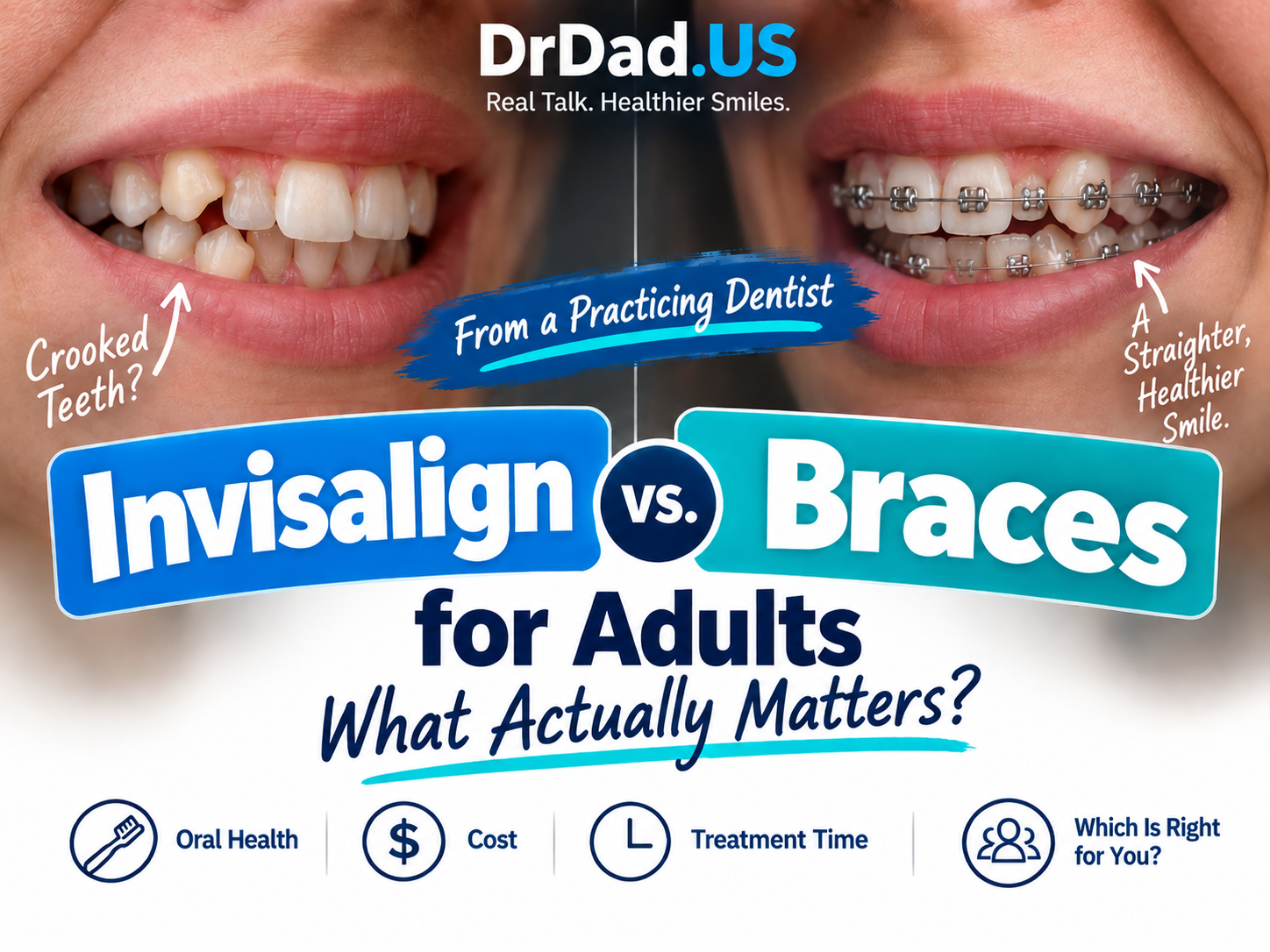
Today, once again, I heard a question I hear all the time in my dental office: “Doctor, what do you think about Invisalign?”
My first thought is usually: What do your teeth think about Invisalign?
That may sound like a joke, but it gets to the real issue. When adults compare Invisalign vs braces, the best choice is not simply the appliance that looks better. It depends on your teeth, your bite, your lifestyle, your willingness to follow instructions, and the type of tooth movement your case requires.
Invisalign Has Some Big Advantages for Adults
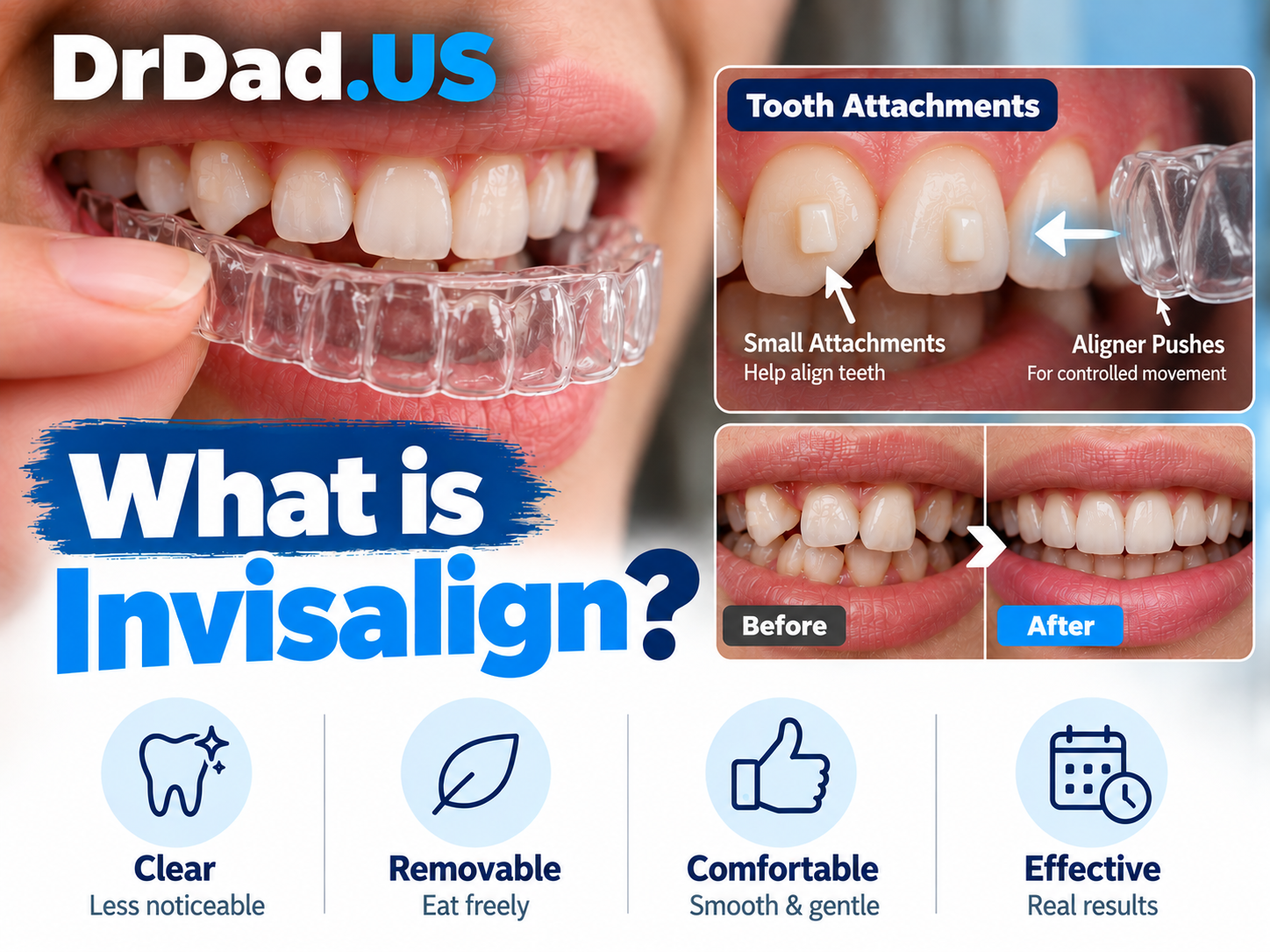
For many adult patients, Invisalign is appealing for obvious reasons. Clear aligners are much less noticeable than metal braces, they can be removed for meals, and they generally fit more easily into a professional or social lifestyle.
But one of the biggest advantages I see clinically is oral hygiene. Because the aligners come out, patients can brush and floss normally. With fixed braces, cleaning around brackets and wires takes more time and attention.
The Catch: Invisalign Only Works When You Wear It
Clear aligners are removable, which is both their strength and their weakness. Patients typically need to wear them about 20 to 22 hours per day, depending on their treatment instructions. The aligners can’t move teeth while they’re sitting on your bathroom counter.
Why Braces Can Be Better for Complicated Cases
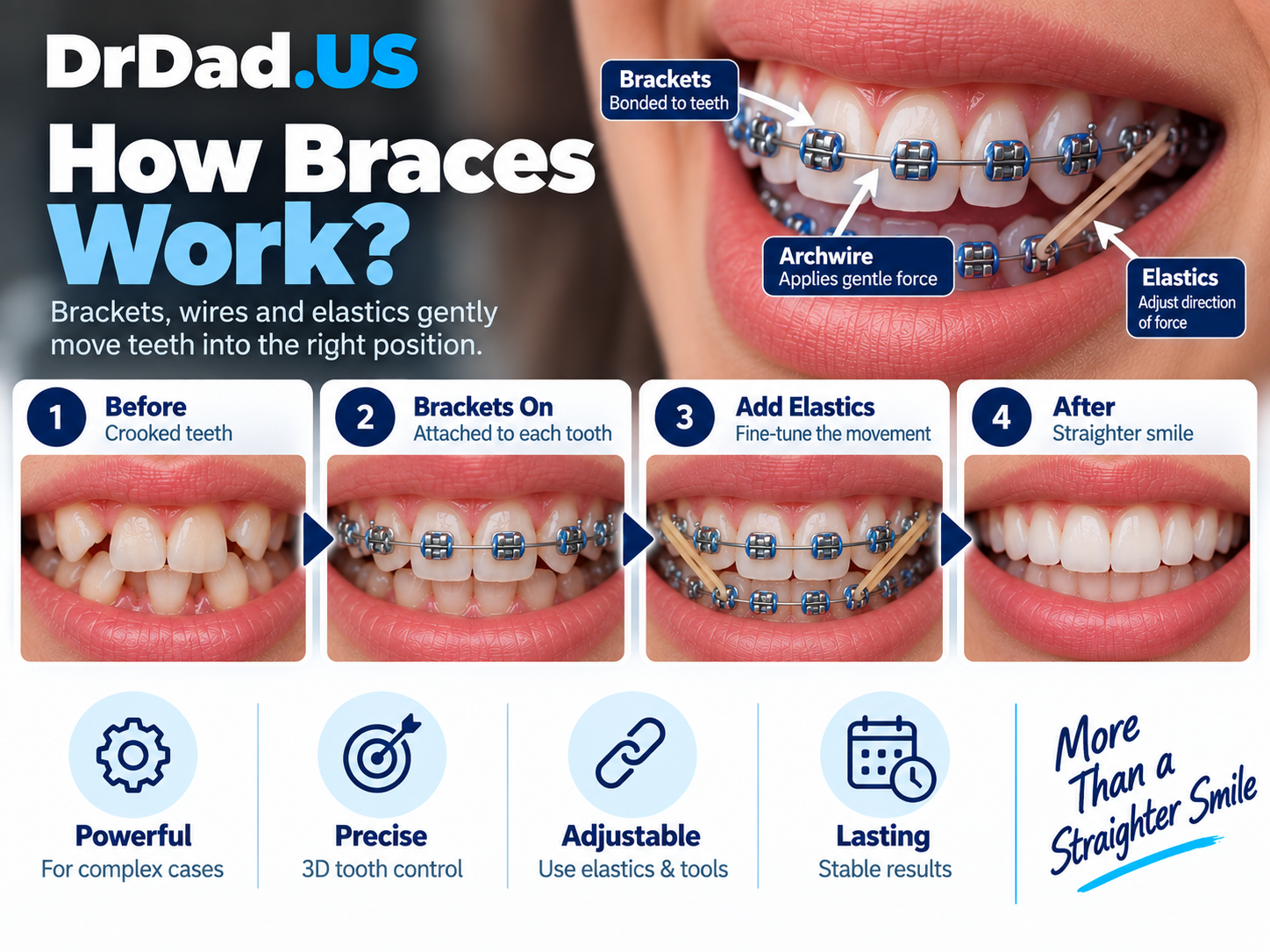
Orthodontic tooth movement is ultimately about physics. Teeth move because carefully controlled forces are applied over time. Traditional braces give the treating dentist or orthodontist direct mechanical tools: brackets bonded to the teeth, archwires, adjustments, and orthodontic elastics (rubber bands). These can make it easier to control the direction and magnitude of forces in certain complicated movements and bite corrections.
Modern Invisalign systems can treat many cases that once required braces. Attachments, elastics, optimized aligner designs, and refinements have expanded what clear aligners can do. But in some complex cases, treatment may require additional refinements or may take longer than expected.
Treatment Time Depends on the Case
There is no universal rule that Invisalign is always faster or braces are always faster. Straightforward cases can move efficiently with either system. More complicated movements may be more predictable with fixed appliances, while aligner treatment can sometimes require additional rounds of trays. Teeth are attached to human beings, not spreadsheets.
Eating and Daily Life
With Invisalign, you remove the aligners before eating, so there are relatively few food restrictions. With braces, hard, sticky, or chewy foods can damage brackets or wires and usually need to be limited. Braces are always working because they stay on your teeth. Invisalign gives you flexibility, but that flexibility requires discipline.
Cleaning and Oral Hygiene
Invisalign generally makes brushing and flossing easier because the trays are removable. Braces require careful cleaning around brackets, wires, and the gumline. Poor plaque control during orthodontic treatment can contribute to cavities, gum inflammation, and visible white-spot lesions.
Comfort
Both treatments can create pressure and soreness when teeth are moving. Clear aligners have smooth plastic surfaces, while braces can occasionally irritate the cheeks or lips. Comfort varies from person to person.
Cost
Invisalign is often more expensive, although the actual difference varies by office, case complexity, treatment length, refinements, retainers, and insurance coverage. When comparing prices, ask what the quoted fee actually includes.
What Should You Ask Before Choosing?
Ask what tooth movements you need, whether your bite is complicated, how important removability is to you, whether you will realistically wear aligners as instructed, how hygiene will differ, and whether refinements and retainers are included in the fee.
Don’t ask which appliance is better. Ask which appliance is better for your case.
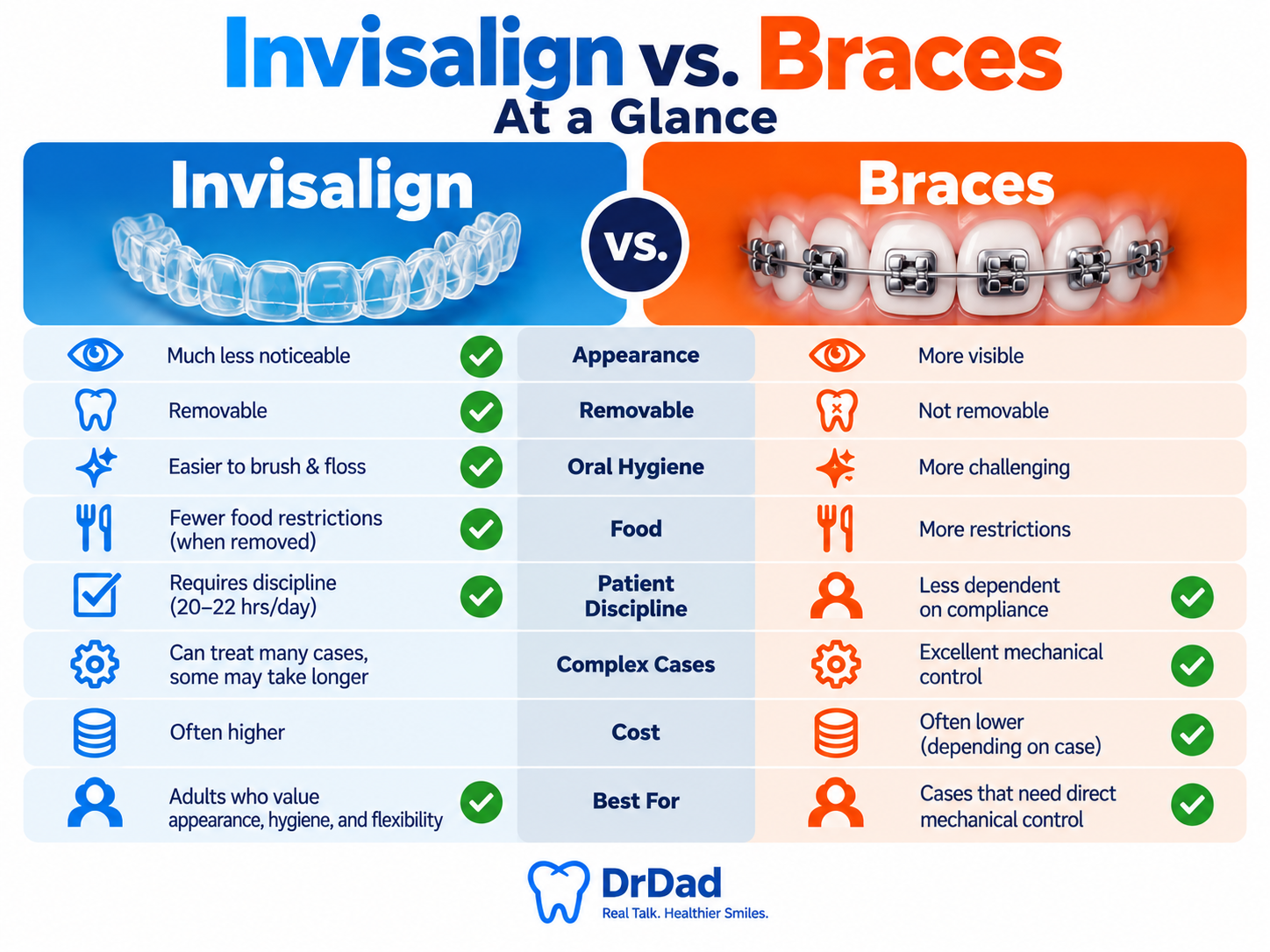
Invisalign vs Braces: At a Glance
| Factor | Invisalign | Braces |
|---|---|---|
| Appearance | Much less noticeable | More visible |
| Removable | Yes | No |
| Oral hygiene | Easier brushing and flossing | More challenging |
| Food | Fewer restrictions when removed | More restrictions |
| Compliance | Requires consistent wear | Less dependent on patient wear time |
| Complex cases | Can treat many; some may take longer | Excellent direct mechanical control |
| Cost | Often higher | Often lower, depending on case |
DrDad Tips
If your case is suitable for either option and you value appearance, easier oral hygiene, fewer food restrictions, and removability, Invisalign can be an excellent choice for an adult. But if your case requires more complicated tooth or bite movements, or you know consistent aligner wear will be difficult, traditional braces may give your dentist or orthodontist more direct mechanical control.
The most useful consultation is one where your provider explains why one system fits your particular teeth and bite rather than simply selling you an appliance.
Disclaimer
This article is based on the author’s professional experience as a practicing dentist in the United States and is provided for general educational and informational purposes only. It is not a diagnosis, treatment plan, or personalized medical or dental advice. Every patient and orthodontic case is different. Consult your own dentist or orthodontist for an examination and recommendations appropriate to your individual needs.